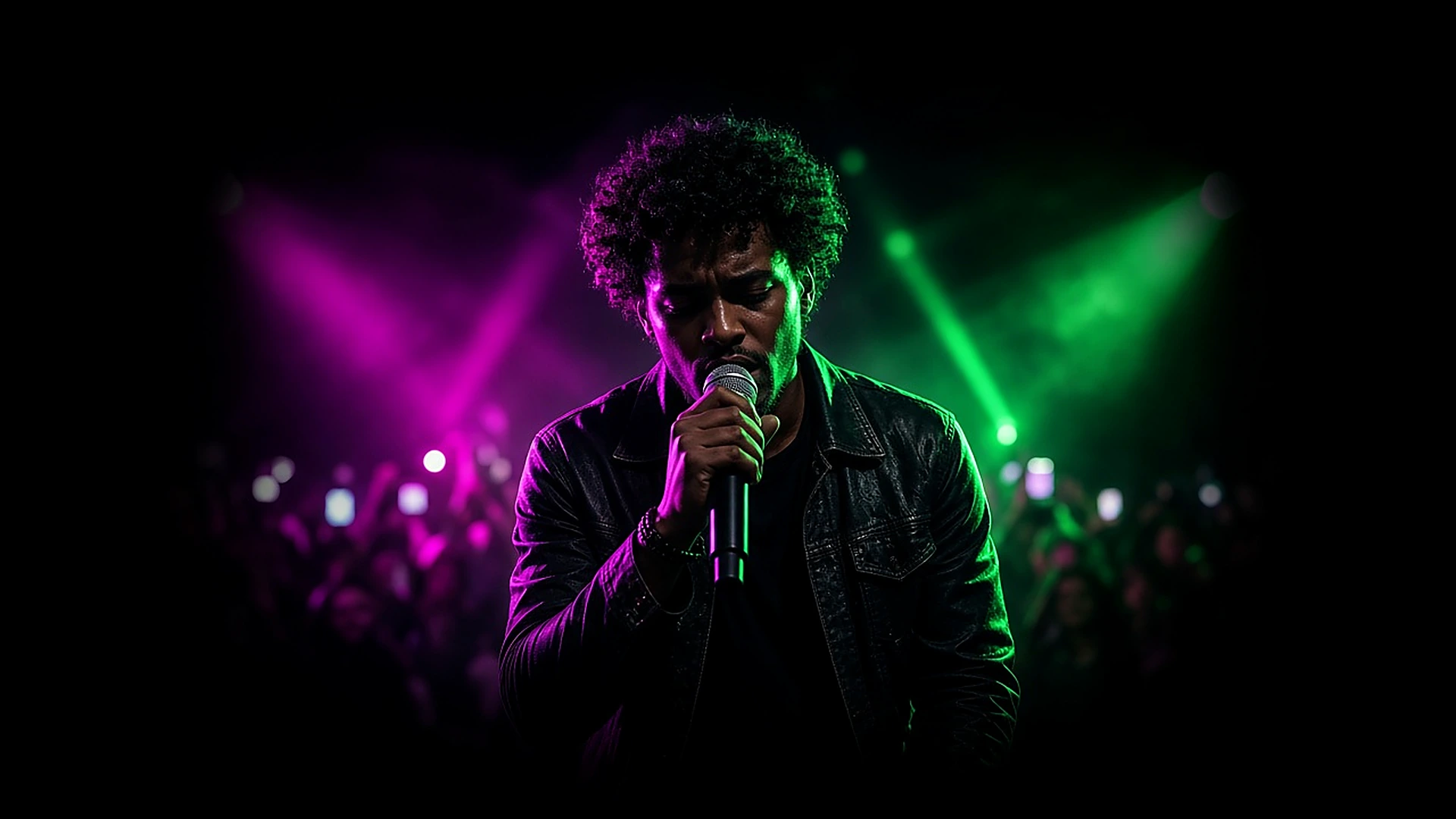
Music marketing used to have a clearer staircase: radio, press, playlist, tour, repeat. Those things still matter. They just are no longer the front door. In 2026, most new listeners will meet an artist the same way they meet a brand — in a feed, usually through a short clip, often with the sound off, and with a dozen other options one swipe away.
The scale of that feed is hard to overstate. DataReportal and Kepios’ Digital 2026 Global Overview Report (data to October 2025) counted 5.66 billion social media user identities worldwide, 68.7% of the global population, up 4.8% year over year (259 million added). You do not need all of them. You need a reliable way to reach the people who will stream, save, come to a show, or tell a friend. That path now runs through social platforms, short-form video, creators, and paid ads.
Discovery has moved into the feed
Playlists and editorial still help a record travel, but they are not a plan by themselves. Discovery has become a content problem. If a listener cannot be stopped mid-scroll by a hook, a visual, or a feeling, they will never get far enough to care about a pre-save.
The platforms where that discovery happens are not a mystery. HubSpot’s 2026 State of Marketing (a survey of more than 1,500 marketers) found that 70% of brands use Instagram, now ahead of Facebook at 69.6%, and 54.5% of brands use TikTok as a marketing platform. Artists are competing in the same attention market, on the same apps, against the infinite scroll. Treating TikTok, Reels, and Shorts as optional promotional extras is how a release gets announced to people who already follow you and ignored by everyone else.
Short-form is the format doing most of that work. Wyzowl’s State of Video Marketing 2026 (266 respondents, late 2025) found that 48.6% of marketers ranked short-form video among their top three formats for ROI, first among all formats, and that 85% of people said they have been convinced to buy a product or service by watching a video. A stream is not a checkout, but the psychology is related: a short clip is often the thing that turns a stranger into a listener. The hook is the product demo.
Build a content system, not a release-week panic
The worst artist marketing plan is silence, then a burst of promotional posts in release week, then silence again. Algorithms and audiences both reward cadence. A working system gives you something true to post on ordinary Tuesdays, not just on street date.
Cut from the work itself. A first line, a drum pattern, a lyric that lands, a vocal take, or a live fragment — these are not leftovers. They are the marketing. One session can produce a week of clips if someone is responsible for capturing and cutting them. The artists who look “naturally good at social” usually have a process, even if it is just a phone on a tripod and a person who knows what to keep.
Tell the truth about the person, not just the single. Listeners follow people. Behind-the-scenes work, point of view, humor, and taste are not dilutions of the art — they are context that makes the art easier to choose. The feed is crowded with songs, and less crowded with artists who feel specific.
Stay native to each platform. A horizontal live clip with a “full song on Spotify” sticker is not a TikTok strategy. Lead with the moment that would make a stranger stop, design for vertical, caption it, and put the call to action after you have earned the second watch. Then ask for the stream or the pre-save.
Creators and communities move records
Artist marketing and influencer marketing have merged more than most label plans admit. A creator who stitches a hook, uses a sound, or talks honestly about a lyric can move a song farther than a generic promotional ad. Influencer Marketing Hub estimated the global influencer marketing industry at $32.55 billion in 2025, and in its 2026 budget survey of more than 600 marketers, 87.49% expected their influencer budget to increase. Music should not sit outside that shift.
You do not need a hundred celebrities. You need creators whose audiences actually overlap your listeners — genre, region, humor, fashion, or community. HubSpot’s 2026 research found that micro-influencers with under 100,000 followers deliver the highest ROI. For a rising artist, that is good news: a mid-tier creator who genuinely likes the record is often more useful than a distant fame bounce.
Brief them like partners, not billboards. Give them the record, the story, and a clean way to send people to the music. Let them talk the way they talk. Track results with unique links or codes where you can, and reuse the clips that work as paid ads if you have the rights.
When to put ads behind the art
Organic content tells you what the market already wants to watch. Paid media helps you stop guessing and start scaling. The IAB and PwC full-year 2025 report (April 2026) put U.S. internet ad revenue at $294.6 billion, up 13.9%, with digital video the fastest-growing format at $78.0 billion, up 25.4%, and social media ad revenue up 32.6%. The market is already buying attention where your listeners live.
The mistake is to point ads at a song no one has a reason to care about yet, using creative that looks like an ad. The better move is to take the organic clip that already held attention — a hook, a live moment, a creator video — and put spend behind it. Target widely enough to find new listeners, then retarget people who watched or clicked. Refresh the first seconds before the creative dies, and measure more than cost per click: watch time, follows, and whether outbound clicks turn into plays and saves.
Ads will not fix a record nobody wants to hear. They will keep a song that is already connecting from depending entirely on the mood of an organic algorithm.
A practical rollout map
Start earlier than you think. The content system should be live before the announcement, so release week is an acceleration, not a cold start. Seed a few trusted creators, post consistently from the artist’s own channels, and pick a simple idea people can participate in — a sound, a line, a visual motif.
On release week, tighten the call to action and increase the cadence, but do not replace the content that was already working with generic “out now” graphics. After release, keep cutting. The second and third months are where many artists go quiet, and where a song can still find a second life.
Tie it together with email or SMS if you have a real list, and with a landing page that does one job: get the visitor to the music, the tour date, or the list. Social will do most of the discovering. Your job is to make the next step obvious.
The Ekey approach
Ekey works with artists, creators, and brands that need this kind of system — content, creators, and paid media pointed at the same goal. We have managed $5 million-plus in campaigns. The standard that matters is simple: did more of the right people hear the work, and did they come back for it?
The data is already clear about where attention lives. Two-thirds of the world is on social media, short-form is the format marketers rate highest for ROI, and creators are a mainstream budget line. For artists, the opportunity is not to become a content company for its own sake, but to treat the feed with the same seriousness as the record.
Ready to put this to work?
If you want a partner to plan, produce, and scale the work, start a project with Ekey.
Sources
1. DataReportal / Kepios, Digital 2026: Global Overview Report (2026; data to October 2025; “user identities” may not equal unique individuals).
2. HubSpot, 2026 State of Marketing (survey of 1,500+ marketers, 2026).
3. Wyzowl, State of Video Marketing 2026 (266 respondents, late 2025).
4. Influencer Marketing Hub, Influencer Marketing Benchmark Reports 2025 and 2026.
5. IAB & PwC, Internet Advertising Revenue Report: Full Year 2025 (April 2026). Survey figures reflect respondents’ answers and are not Ekey results. Ekey campaign figures are as stated on ekey.co.